Tokyo: Insider tips
Tokyo is a huge and often confusing city for travelers, but with these tips you needn't be daunted by the Japanese capital.
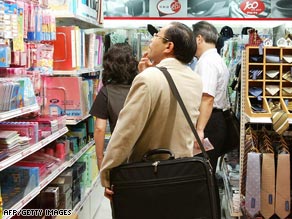
100 Yen shops are great value for money.
Subway
Tokyo has an incredibly efficient subway, but the 13 lines are run by two different companies, Toei Subways and Tokyo Metro, meaning a bewildering variety of day passes are available. A good bet is the Toei and Tokyo Metro One-Day Economy Pass, which costs ¥1,000 and gives you a day of unlimited travel on all subway lines. During rush-hour the subway becomes an unbearable crush. All social niceties go out the window in a free for all that's best avoided completely.
Taxis
During the day traffic can be gridlocked, but in the evening, when traffic is lighter, taxis are reasonably alternative to the subway. Enter and exit taxis by the back left-hand door. Don't make the novice's error of trying to open or close the door -- your white-gloved driver will do that from the front seat. Ideally, have a map of your destination, or at least an address written in Japanese. Tipping is not expected.
ATMs
Although Tokyo is ultra-modern, you may have to revert to carrying travelers' checks for the duration of your stay. Few ATMs accept foreign cards, although you should have more luck at post offices and branches of Citibank.
see full schedule »
ATMs in busy areas stay open until 9 p.m. and most are closed at weekends, although Citibank has 24-hour ATMs. Credit cards are still not accepted as widely as you might expect, so travelers' checks are your best bet -- and make sure you're carrying cash if you're planning a night out away from the city center.
What's on
The best way to keep up with events and entertainment is with one of Tokyo's English language magazines. Metropolis and Tokyo Notice Board are two of the best -- and they're both free.
100 Yen shops
These bargain stores are hugely popular in Tokyo, selling everything from food to toiletries for ¥100 plus ¥5 tax -- about $1. They are also a great place to pick up an inexpensive, kitschy souvenir. Daiso 100-Yen Shop in Takeshita-dori (Village 107 Building, 1-19-24 Jingumae, Shibuya-ku) has four floors of cheap thrills.
Etiquette
As a foreigner, having a generally courteous demeanor will cover a multitude of sins, but there are a few rules you should try to remember:
- Never use your chopsticks to take food from someone else's and don't stick your chopsticks upright in your food when you've finished -- both of these denote funerary customs.
- If you're eating with other people, don't pour your own drink. Fill your neighbor's glass and wait for them to reciprocate.
- The Japanese don't pour sauces onto their rice. Leave any sauces in their serving dish and dip your food in lightly.
- It's a faux pas be seen eating in public -- especially on a train. And blowing your nose in public is an absolute no-no.
What are your tips for a great stay in Tokyo? Where have you found the "real" Tokyo? Send us your suggestions in the "Sound Off" box below and we'll print the best.